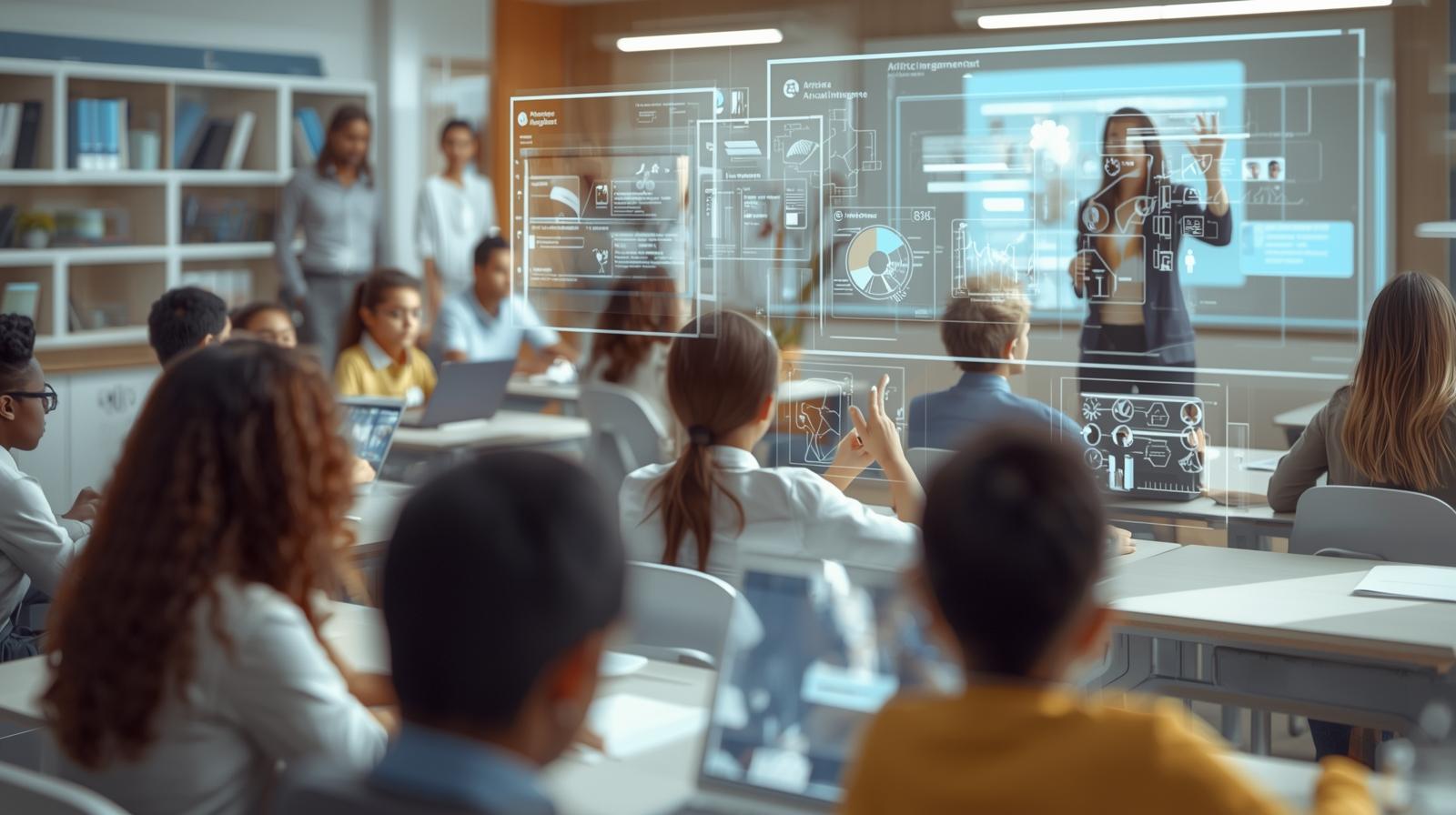
Artificial Intelligence (AI) is redefining the education landscape in ways that were once unimaginable. Traditional classrooms, where one-size-fits-all teaching methods dominated, are now evolving into dynamic, student-centered environments powered by AI-driven tools. This shift is transforming how students learn, how teachers teach, and how education systems prepare young minds for the challenges of the future.
AI and Personalized Learning
One of the most profound contributions of AI to education is the ability to deliver personalized learning experiences. Unlike traditional models, where all students follow the same curriculum at the same pace, AI-driven platforms analyze student performance, strengths, and weaknesses to tailor content. This helps slow learners receive extra support while advanced learners progress faster.
- Adaptive learning platforms adjust lessons based on real-time performance.
- AI tutors provide instant feedback and clarify doubts without waiting for teacher availability.
- Customized study plans motivate students to engage more actively with the material.
Transforming the Role of Teachers
AI is not designed to replace teachers but to support them. By automating repetitive tasks such as grading, attendance, and administrative work, teachers gain more time to focus on mentoring, creativity, and individualized student support. AI can also identify learning gaps early, allowing teachers to intervene with targeted strategies.
- Automation reduces teacher workload.
- Data-driven insights highlight student learning patterns.
- Teachers can focus on emotional intelligence and social skill development.
Future Classrooms with AI Integration
Future classrooms will no longer be confined to four walls. With AI, digital platforms, and global connectivity, students can access resources and interact with peers worldwide. Classrooms are becoming interactive hubs where learning happens through simulations, intelligent virtual assistants, and collaborative online spaces.
- Virtual reality (VR) and AI create immersive learning environments.
- AI chatbots assist students with 24/7 support.
- Global learning communities promote cultural exchange and diversity.
Challenges of AI in Education
Despite its potential, AI integration in classrooms also brings challenges. Data privacy is a major concern, as educational platforms collect vast amounts of student information. Additionally, digital inequality remains a barrier, as not all regions have equal access to technology. There is also the risk of over-dependence on AI, which might reduce opportunities for face-to-face interaction and critical thinking if not balanced carefully.
- Ensuring equitable access to AI-powered education.
- Protecting student data and ensuring ethical use of AI.
- Balancing technology with traditional human interaction in learning.
The Road Ahead
The impact of AI on personalized learning and future classrooms is undeniable. While challenges exist, the benefits outweigh the drawbacks when implemented responsibly. AI has the power to create inclusive, adaptive, and globally connected classrooms that prepare students not just for exams, but for life in an ever-changing world. Teachers, students, and policymakers must work together to embrace AI as a partner in education, ensuring that learning remains both human-centered and future-ready.